
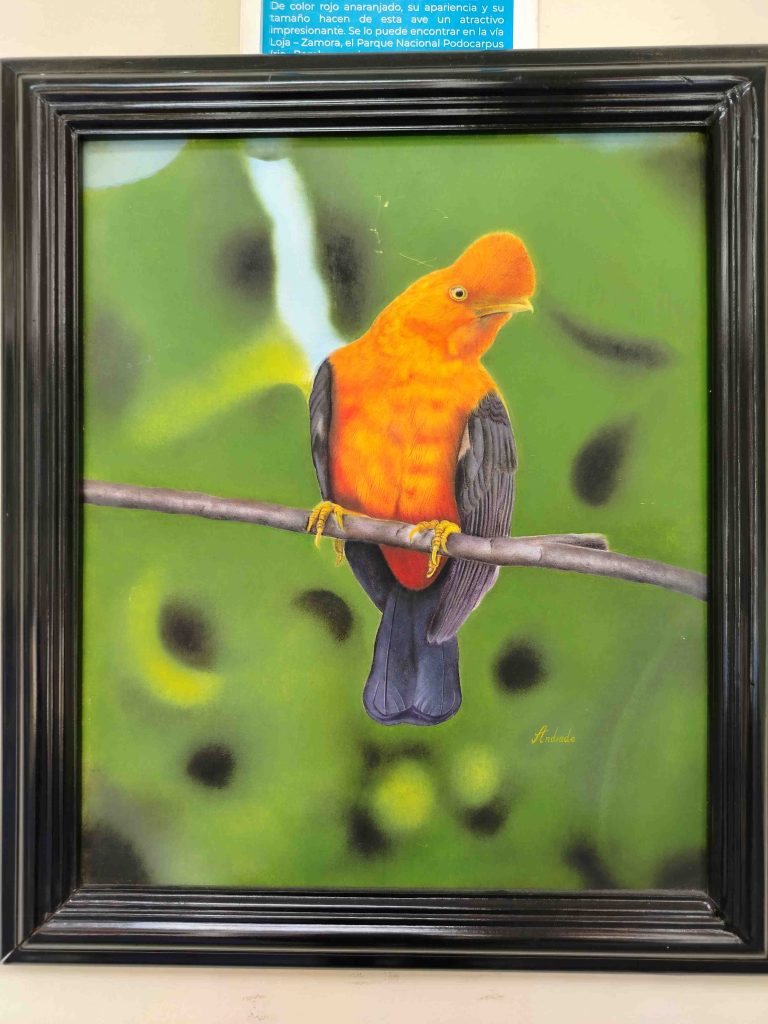
Andean Cock-of-the-Rock Southern Ecuador, Art, & Conservation
Beyond its visual impact, the Andean Cock-of-the-Rock plays an important ecological role as a seed disperser in Andean cloud forests. However, habitat loss and forest fragmentation remain ongoing threats in parts of its range. Protecting intact forest corridors in southern Ecuador is essential to ensure the long-term survival of this species and many others that depend on these ecosystems. Responsible birdwatching and nature-based tourism can contribute directly to conservation when carried out ethically and with respect for wildlife.
HABITAT AND DISTRIBUTION:
- The Andean Cock-of-the-Rock (Rupicola peruvianus) inhabits humid tropical and subtropical forests along the eastern and western slopes of the Andes. In Ecuador, the species is closely associated with Andean cloud forests, where steep terrain, dense vegetation, and high humidity provide suitable conditions for feeding, breeding, and lekking behavior.
- The species generally occurs between 600 and 2,000 meters above sea level, although local populations may persist at specific elevations depending on forest structure and food availability. In southern Ecuador, the Andean Cock-of-the-Rock is found in important protected areas such as Podocarpus National Park, one of the country’s most biodiverse reserves and a key refuge for montane forest species.
- However, beyond protected areas, the species also survives in highly fragmented landscapes, particularly in parts of southern Ecuador and the province of Zamora-Chinchipe. In these regions, small populations persist in isolated forest patches, including remnants within private lands and cattle ranching areas, where natural forest has been extensively cleared.
- These fragmented habitats often force individuals to move across open pastures with little or no tree cover in search of food and suitable lek sites, increasing their vulnerability and highlighting the growing pressure on remaining forest fragments throughout the southern Andes.
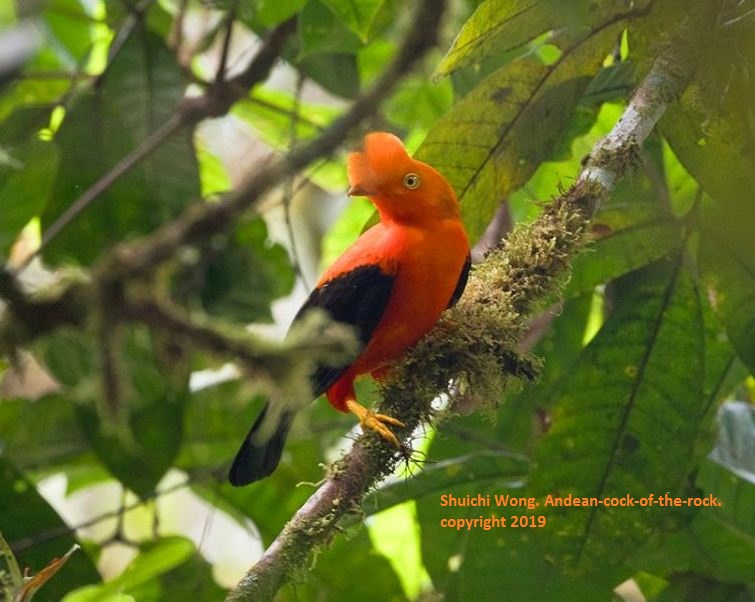
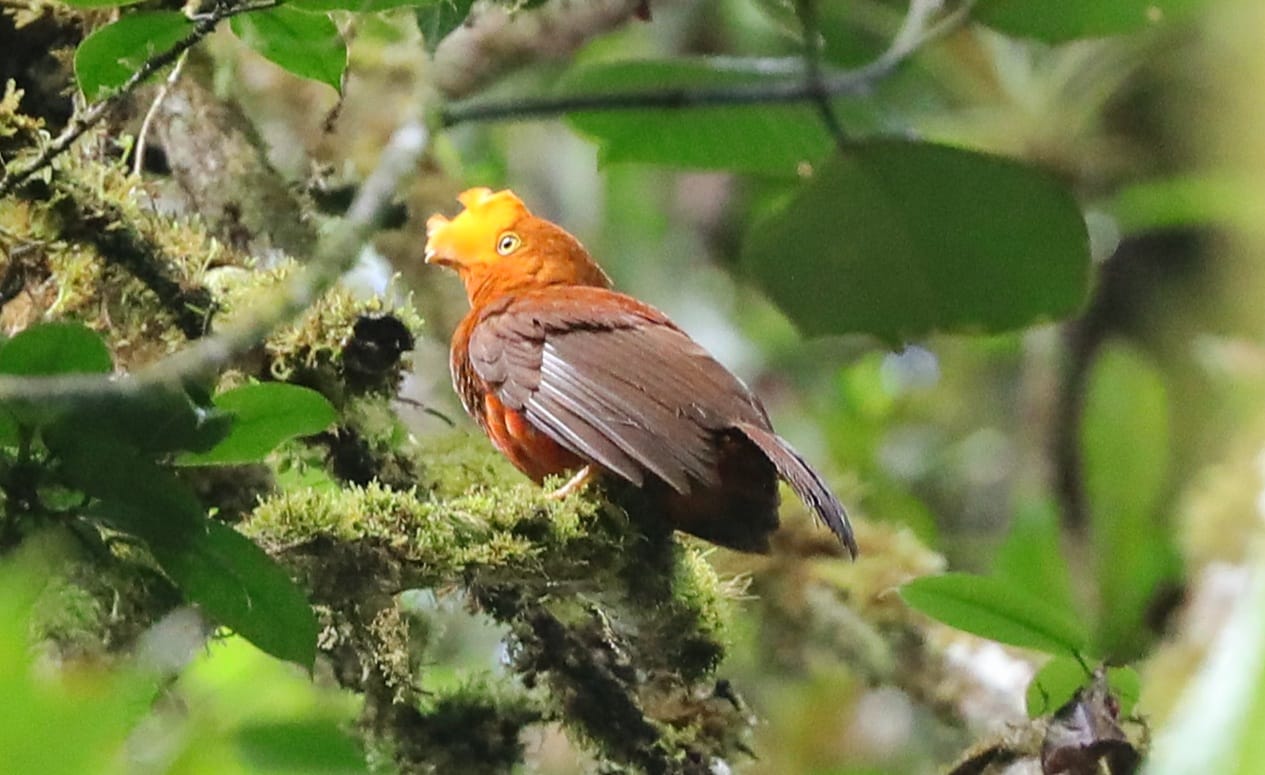
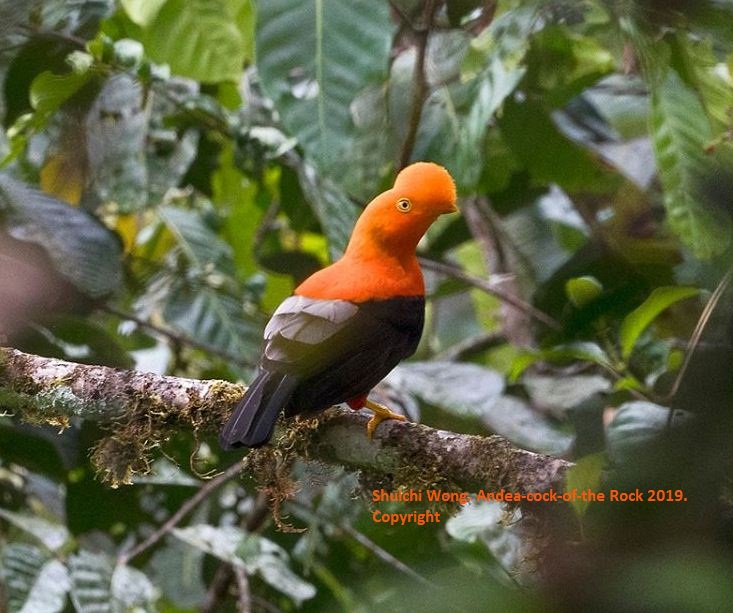
Conservation Status and Threats
Although the Andean Cock-of-the-Rock (Rupicola peruvianus) is currently classified as Least Concern at a global level, its local conservation status in southern Ecuador is increasingly fragile. Extensive deforestation, forest fragmentation, and land-use change—primarily driven by cattle ranching and agricultural expansion—have dramatically reduced suitable habitat across large areas of the southern Andes.
In provinces such as Zamora-Chinchipe, remaining populations are often restricted to small, isolated forest patches, many of them located on private lands rather than protected areas. These remnant forests are frequently too small to sustain stable populations, forcing individuals to travel long distances across open pastures with no tree cover to reach feeding areas or traditional lek sites.
This landscape fragmentation not only increases energy expenditure and predation risk, but also disrupts lek stability, which is essential for the species’ reproductive success. Even where small leks persist, continued tree cutting and degradation of surrounding vegetation further threaten their long-term survival.
Protected areas such as Podocarpus National Park play a crucial role in safeguarding viable populations by maintaining larger, continuous tracts of forest. However, effective conservation of the Andean Cock-of-the-Rock in southern Ecuador will also depend on the protection of forest corridors, responsible land management on private properties, and increased awareness of the ecological value of remnant forest patches.
Birdwatching and nature-based tourism, when conducted ethically and non-invasively, can contribute to conservation by providing economic incentives for habitat protection and fostering appreciation for this emblematic species of the southern Andes.
Responsible Birdwatching in Southern Ecuador
Observing the Andean Cock-of-the-Rock is a powerful experience, but it also comes with responsibility. This species is highly sensitive to disturbance, especially around lek sites, where males perform courtship displays essential for reproduction. For this reason, responsible birdwatching practices are critical to ensure that tourism does not negatively affect local populations.
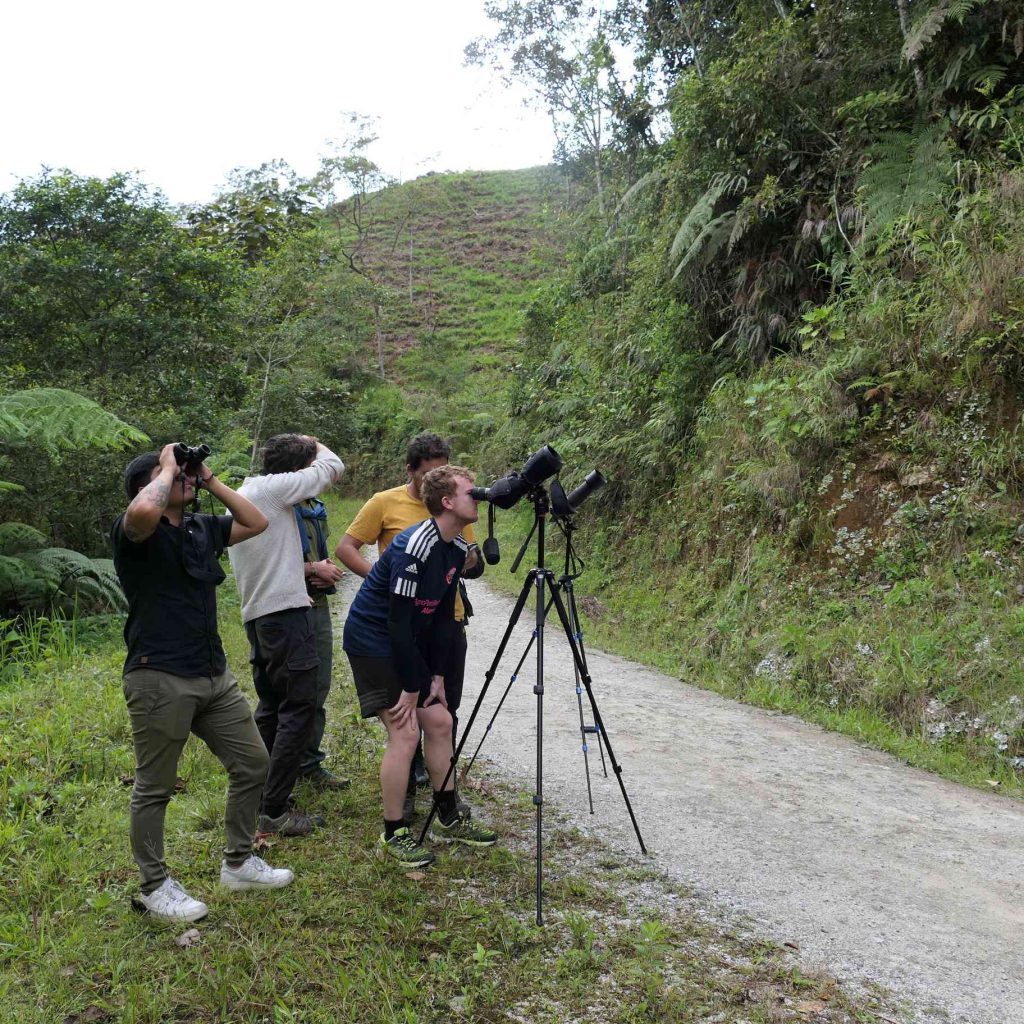
At Exploraves Birding Tours, all birdwatching activities are conducted following a non-invasive and ethical approach. Visits to lek areas are carefully planned to minimize disturbance, maintaining appropriate distances, avoiding playback misuse, and respecting natural behavior at all times. Group sizes are kept small, and observation periods are limited to reduce stress on the birds.
Southern Ecuador offers exceptional opportunities to observe this iconic species, particularly in well-preserved forests within protected areas such as Podocarpus National Park, as well as in select private reserves where conservation-minded landowners actively protect remaining forest patches. By choosing responsible birdwatching experiences, visitors directly support local conservation efforts and contribute to the long-term protection of these fragile ecosystems.
Birdwatching, when done correctly, becomes more than a wildlife encounter—it becomes a tool for conservation, education, and community engagement, helping to preserve the Andean Cock-of-the-Rock and the rich biodiversity of southern Ecuador for future generations.

whatsapp: +593981286507
5932 – 2582434
avearatinga@yahoo.es
info@exploraves.com